

Discovering Azorean food in São Miguel means getting to know the island through its ingredients, recipes and the people who bring them to the table. From Atlantic fish and dairy products to dishes cooked using geothermal heat, local food reveals the relationship between the landscape and everyday life.
Your trip might include a Furnas stew lunch, limpets to share, a traditional pastry in Vila Franca do Campo or a tea break overlooking the plantations. These experiences fit naturally into your outings without turning every meal into a scheduled activity.
This guide brings together dishes and products worth trying, with suggestions for including them in your itinerary and choosing the flavours that appeal to you.
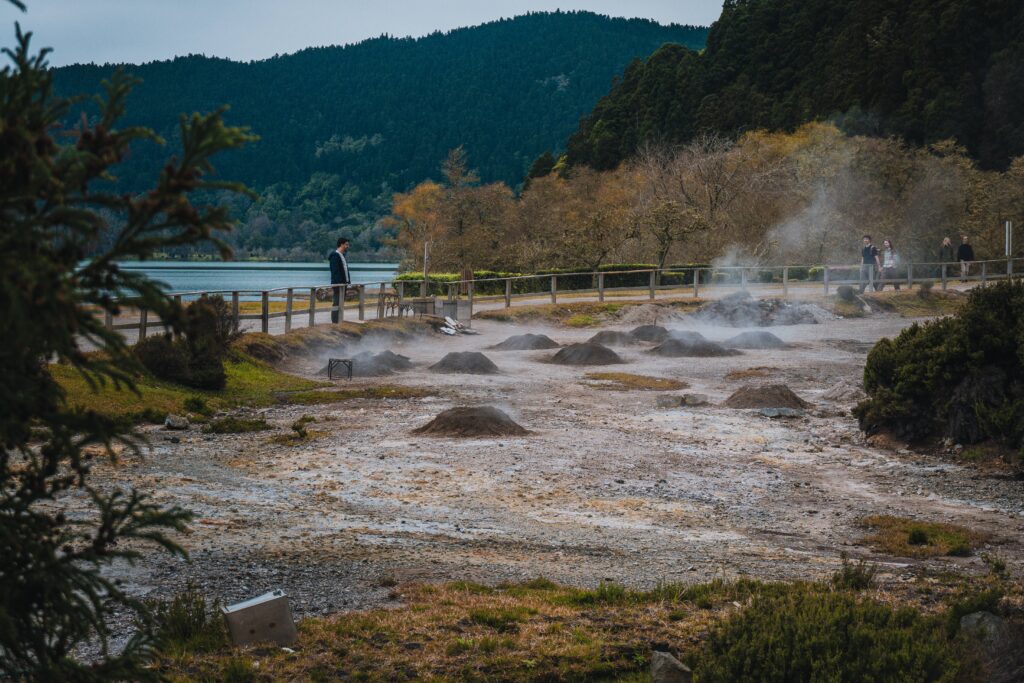
Cozido das Furnas is one of São Miguel’s best-known specialities. Its distinctive feature is the cooking method: pots are lowered into holes in the ground in the geothermal area beside Lagoa das Furnas, where natural heat slowly cooks the ingredients.
The recipe usually combines different meats, sausages and vegetables, including cabbage, potatoes, sweet potatoes and taro, locally known as inhame. Ingredients vary, but the long cooking process allows them to cook in their own juices.
You can combine a lake visit with watching the pots being lifted from the ground, followed by lunch at a restaurant in Furnas. Check the arrangements and book your stew in advance, particularly if you want to try it on a specific day. The cooking area beside the lake is separate from the geothermal area in the village centre.
Fish and shellfish have an important place in Azorean cooking. In São Miguel, it is worth asking about the day’s catch rather than expecting every restaurant to serve a particular species.
Tuna appears in several preparations, including seared or grilled. Depending on availability, you may also find fish listed under local names such as boca-negra, chicharro or veja. Before ordering fish sold by weight, confirm the price and portion size, especially if you plan to share.
Limpets, known locally as lapas, are another speciality to try. They may be served grilled, often with butter and garlic, or in other regional preparations. They make a good starter to share and introduce you to an ingredient closely associated with Azorean cooking.
Stewed octopus, prepared with wine and seasonings such as pimenta da terra, offers an alternative to grilled fish. It is a richer dish, often accompanied by potatoes or rice.
São Miguel’s pastures help explain the importance of cattle farming and dairy production on the island. At the table, that connection appears in meat dishes as well as the cheese and butter served with bread.
Bife à regional is a steak dish you may find on local menus, with recipes varying between restaurants. Garlic, butter and pimenta da terra may feature in the seasoning, but ask how it is prepared if you have a particular flavour or accompaniment in mind.
Local cheeses vary in texture, intensity and maturity. Try fresh cheese, sometimes served with pimenta da terra, and compare it with a matured cheese produced on the island. Exploring different varieties is part of the experience.
Regional butter also deserves attention, even as part of a simple meal. Served with bread or a bolo lêvedo, it offers another introduction to the Azores’ dairy products.
Traditional pastries and breads provide good reasons to stop at a bakery or enjoy a leisurely breakfast. Specialities to look for include queijadas from Vila Franca do Campo, bolos lêvedos from Furnas and massa sovada.
Queijadas de Vila Franca do Campo are a well-known local sweet treat to try during a visit to the town. If you enjoy them, you can also buy some to take away, following the producer’s storage advice.
Bolos lêvedos are soft, round and slightly sweet. They can be eaten plain, spread with butter or served with savoury fillings, making them suitable for more than dessert. In Furnas, they fit easily into a break between visits.
Massa sovada is a sweet bread available from bakeries and regional food shops. Trying these different specialities introduces you to the baking traditions that form part of Azorean food culture.
Tea is another product that connects food with the landscape. On the north coast, Gorreana and Porto Formoso offer opportunities to discover São Miguel’s tea-growing tradition, with visits and tastings according to each venue’s arrangements.
Allow time to learn about production and taste the tea. Both places have their own history, making a visit an opportunity to understand how this crop became established on the island.
Azorean pineapple is grown in glass greenhouses in São Miguel using a distinctive cultivation process. You may find it served fresh, used in desserts or made into products such as jams and liqueurs.
Visiting a greenhouse helps explain the work behind the fruit. Check which producers welcome visitors and what the visit includes, rather than assuming every growing site is open to the public.
Ponta Delgada offers opportunities to discover regional dishes and products, so you do not need to leave the city to eat well. Elsewhere on the island, meals can be combined with places you already plan to visit.
Furnas is a natural choice for cozido and bolos lêvedos. Vila Franca do Campo lends itself to a queijada stop, while a north-coast outing can include tea. Organising meals this way avoids unnecessary journeys simply to work through a food checklist.
When choosing restaurants, look at the menu, ask about house specialities and confirm prices, portions and availability. A small or remote restaurant is not automatically better, just as a restaurant in a popular tourist area may make excellent use of local ingredients.
Choose a few experiences you particularly want to try and spread them across your stay. A cozido lunch can help shape your day in Furnas, while other meals can remain flexible around your outings.
Check restaurant closing days and book ahead for dishes prepared to order or places you especially want to visit. Leave room for simple meals and unplanned stops, without feeling you need to taste everything in one trip.
If you have dietary requirements, ask about ingredients and preparation before ordering. Vegetable dishes may contain meat or meat stock, while fish dishes may include butter or other ingredients that are not obvious from the menu description.
You could start with cozido das Furnas, a fish dish, limpets and specialities such as local cheese, bolos lêvedos and queijadas from Vila Franca do Campo. Tea and pineapple complete an introduction to the island’s produce, without needing to try everything.
It is advisable to check directly with the restaurant and book in advance. Preparation takes several hours and availability may be limited, so do not assume the dish will be available at any time.
Fish and shellfish dishes are available, while vegetarian and vegan visitors should check menus and confirm ingredients. Choices vary between restaurants, and traditional recipes may contain animal products even when these are not the main ingredient.
No. Ponta Delgada has options for discovering regional cooking. Exploring other towns allows you to combine meals with sightseeing, but quality depends on the individual restaurant rather than its location alone.
Azorean food can be part of the whole trip, from a bolo lêvedo at breakfast to lunch in Furnas or a fish dinner. Allowing time for these experiences gives you the opportunity to discover local products and appreciate different ways of preparing them.
If you are exploring by car, combine meals with nearby visits and avoid fitting too many stops into one day. Discover São Miguel with Amazing Island Rent-a-Car and leave room in your itinerary for the flavours you want to try.