

You pictured São Miguel’s lakes beneath blue skies, viewpoints overlooking the Atlantic and walking trails surrounded by lush vegetation. Instead, you wake up, look out of the window and see rain. Mist covers the mountains, the clouds show no sign of clearing and you begin to wonder whether the day’s plans are ruined.
It is a familiar situation in the Azores, where the weather can change quickly, even during summer. However, rain in São Miguel does not necessarily mean a wasted day. It can be an opportunity to discover places and experiences you might otherwise overlook when your itinerary is filled with lakes, viewpoints and hikes.
From thermal pools and tea plantations to pineapple greenhouses and small cultural attractions, there are plenty of ways to enjoy the island without sunshine. The key is to understand the conditions, adapt your plans and avoid insisting on visiting places where the weather makes the experience difficult or unsafe.
São Miguel’s lush vegetation, green hillsides and humid forests are closely connected to the island’s Atlantic climate. Moisture carried in from the ocean, combined with mountainous terrain, encourages cloud formation and rainfall, particularly at higher elevations.
It is therefore quite normal to find mist covering Lagoa do Fogo while the skies are clearer in Ponta Delgada, or to encounter rain on one road and different conditions just a few kilometres away. This does not mean every shower will pass quickly, though. During more intense weather systems, rain and strong winds can affect the entire island for several hours.
The best approach is to follow the forecast and allow some flexibility in your itinerary. Rather than trying to complete every planned stop regardless of the weather, choose experiences that suit the conditions on the day.
Some experiences become particularly atmospheric in light rain, and bathing in the warm thermal waters of Furnas is one of them.
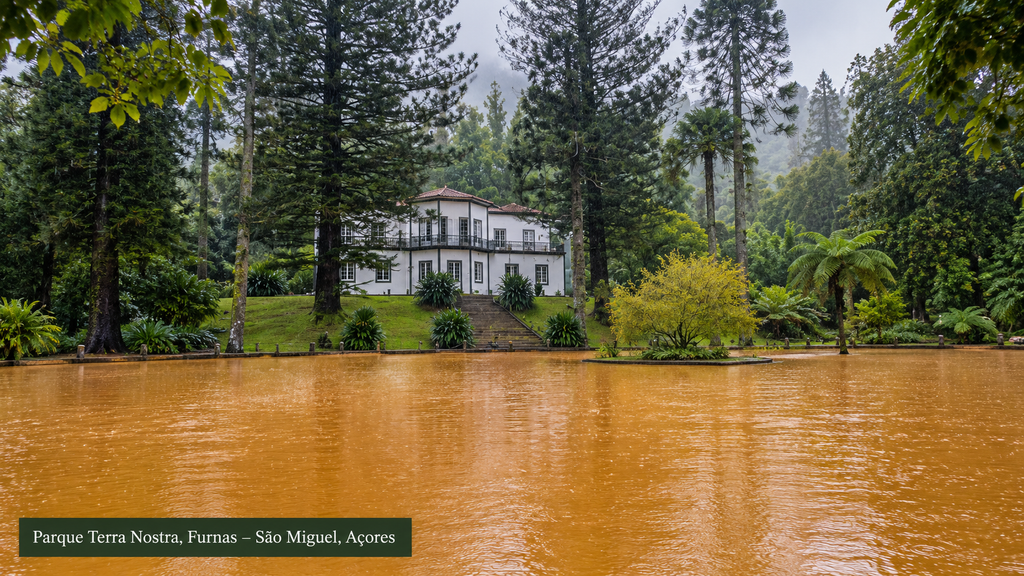
At Poça da Dona Beija, the warm water contrasts with the cool, damp air, while the surrounding vegetation creates a welcoming setting. At Terra Nostra Park, the large thermal pool, surrounded by a historic garden, offers a different experience, especially when low clouds settle over the landscape.
Rain does not necessarily prevent you from enjoying a thermal bath, but there is an important difference between a gentle shower and severe weather. Thunderstorms, strong winds or safety warnings may make bathing unsuitable, and the guidance of each attraction should always be followed.
Before visiting, check opening times, access arrangements and whether booking is required. Iron-rich thermal water can also stain light-coloured fabrics, so a dark swimsuit is a sensible choice.
When the weather is unsuitable for a long walk, visiting a tea factory can be an excellent alternative. On São Miguel’s north coast, Gorreana and Porto Formoso offer an insight into an agricultural tradition closely connected to the island’s history.
At Gorreana, visitors can see equipment used to process tea leaves and learn about the different stages of production. The plantations stretch across hillsides overlooking the ocean, and although rain may make exploring the fields less appealing, the factory itself remains an interesting place to visit.
At Porto Formoso, the experience provides another perspective on tea production, a tradition that has developed in the Azores over several generations.
It is an opportunity to slow down, discover a local product and understand how the humid climate that sometimes disrupts visitors’ plans also contributes to the conditions in which tea is grown.
São Miguel’s pineapples are another example of the island’s distinctive agricultural traditions. Unlike pineapples grown in many tropical regions, these are cultivated in glass greenhouses using a process that requires considerable time and care.
In Fajã de Baixo, near Ponta Delgada, several plantations welcome visitors and explain the different stages of pineapple cultivation. The Pineapple Culture Interpretation Centre also provides information about the history and economic importance of this local industry.
It is particularly suitable for a rainy day because part of the experience takes place in sheltered spaces. The visit does not necessarily require several hours either, making it easy to combine with a museum, lunch or a walk around central Ponta Delgada if the weather improves.
When planning a trip to São Miguel, lakes and viewpoints are often the first attractions that come to mind. Yet Ponta Delgada has cultural spaces worth exploring, many of which are overlooked when the weather is good.
Museu Carlos Machado offers an introduction to the history, art and natural heritage of the Azores. The Military Museum of the Azores, housed in Forte de São Brás, provides another perspective on the region’s past, while Mercado da Graça is a place to discover local produce and observe everyday life in the city.
Between visits, you can stop at a café, try a regional speciality or enjoy a leisurely lunch. If the rain eases, the historic centre is pleasant to explore on foot, with its churches, traditional buildings and distinctive pavements.
Ponta Delgada should not be considered merely a backup option for bad weather. A rainy day may simply give you the opportunity to appreciate a side of the island that deserves more attention.
Gruta do Carvão, near Ponta Delgada, offers a glimpse into a part of São Miguel’s volcanic history that usually remains hidden.
It is a lava tube formed during ancient eruptions, when molten rock continued flowing beneath a surface that had already begun to solidify. Inside, the shapes and textures of the walls help explain some of the geological processes involved in the island’s formation.
As the visit takes place underground, it is less dependent on rainfall than an outdoor activity, although safety conditions and opening arrangements must still be confirmed. Access is controlled, and visits should be arranged in advance according to availability.
It is particularly rewarding for anyone interested in geology or looking for an experience beyond the island’s best-known attractions.
A rainy day can also be an opportunity to explore the island’s food at a more relaxed pace.
In Furnas, the traditional stew cooked using heat from the ground is one of the best-known local experiences, but São Miguel’s cuisine offers much more. Fresh fish, regional produce, cheeses, bolos lêvedos and traditional desserts provide an introduction to different aspects of Azorean culture.
Instead of squeezing a quick meal between viewpoints, take the time to choose a restaurant, discover the ingredients and try something unfamiliar. Stopping at a traditional café or bakery can also turn an afternoon without firm plans into one of the most enjoyable parts of your trip.
Not every memorable experience in São Miguel requires extraordinary scenery. Some can be found around the table, through local recipes and the everyday traditions that help define the island.
Rain also changes the appearance of the landscape, particularly in areas with dense vegetation. Leaves become glossy, shades of green appear deeper and low clouds create an atmosphere very different from a clear, sunny day.
In Furnas, for example, steam from geothermal features can mingle with moisture in the air, while some forested areas of Nordeste take on a particularly atmospheric appearance when mist moves between the trees.
If the rain is light, there are no strong winds and access is safe, a short walk through a garden or an authorised woodland area can be enjoyable. However, demanding hiking trails, streams, waterfalls and unstable slopes should be avoided during heavy rainfall or after prolonged wet weather.
The idea is not to brave dangerous conditions for a photograph, but to enjoy nature when it is genuinely safe to do so.
When the forecast predicts several days of rain, the most important thing is not to base your entire holiday around one location or a single weather app.
Differences in altitude and exposure across São Miguel can create varying conditions between regions. Before heading out, check forecasts from IPMA, look at available webcams and confirm whether any weather warnings or access restrictions are in place.
A simple way to plan is to keep two or three alternatives available:
There is no need to keep driving around the island in search of sunshine. Sometimes the best decision is to enjoy where you are and leave the viewpoints for another day.
In São Miguel, being able to change your plans can make a significant difference. A route originally planned around Lagoa do Fogo might become a visit to Caldeira Velha, if conditions are suitable, or a cultural experience in Ribeira Grande or Ponta Delgada.
Having a car makes these decisions easier, especially when you want to combine places that are less dependent on the same weather conditions. With Amazing Island, you can explore at your own pace, change the order of your visits and make the most of each day without following an overly rigid schedule.
It is important, however, to keep expectations realistic. Finding a dry part of the island will not always be possible, and there are days when safety must take priority over sightseeing.
Rain is possible throughout the year, including summer, although rainfall patterns vary between seasons. It is worth having alternatives ready for wet weather, even when the general forecast looks favourable.
Yes, particularly during light rain when conditions are safe. Thermal experiences, local food and some cultural attractions can still be enjoyable, but weather warnings and local safety rules should always be respected.
Museums, interpretation centres, tea factories, pineapple greenhouses and restaurants are generally more suitable options. During severe weather, it may be better to stay somewhere safe and avoid travelling.
That depends on the trail and the weather conditions. Rain can make paths slippery and increase the risk of falls, landslides and rising stream levels. Always check official trail alerts and current conditions before setting out.
Not necessarily, but a car makes it easier to adapt your itinerary and travel between different parts of the island. Driving should always be adjusted to visibility, road conditions and the weather.
It is natural to arrive in São Miguel with a list of places you want to see and hope for perfect weather. Yet an island so closely connected to the Atlantic is unlikely to fit neatly into an entirely predictable itinerary.
Rain might lead you to a tea factory you had not planned to visit, encourage you to spend more time in a thermal pool or introduce you to a museum that would otherwise have been overlooked. That does not mean every rainy day will be enjoyable or that severe weather should ever be ignored.
It simply means a good holiday does not depend entirely on sunshine. In São Miguel, being willing to adapt your plans can reveal experiences every bit as rewarding as the ones that first inspired you to visit.