

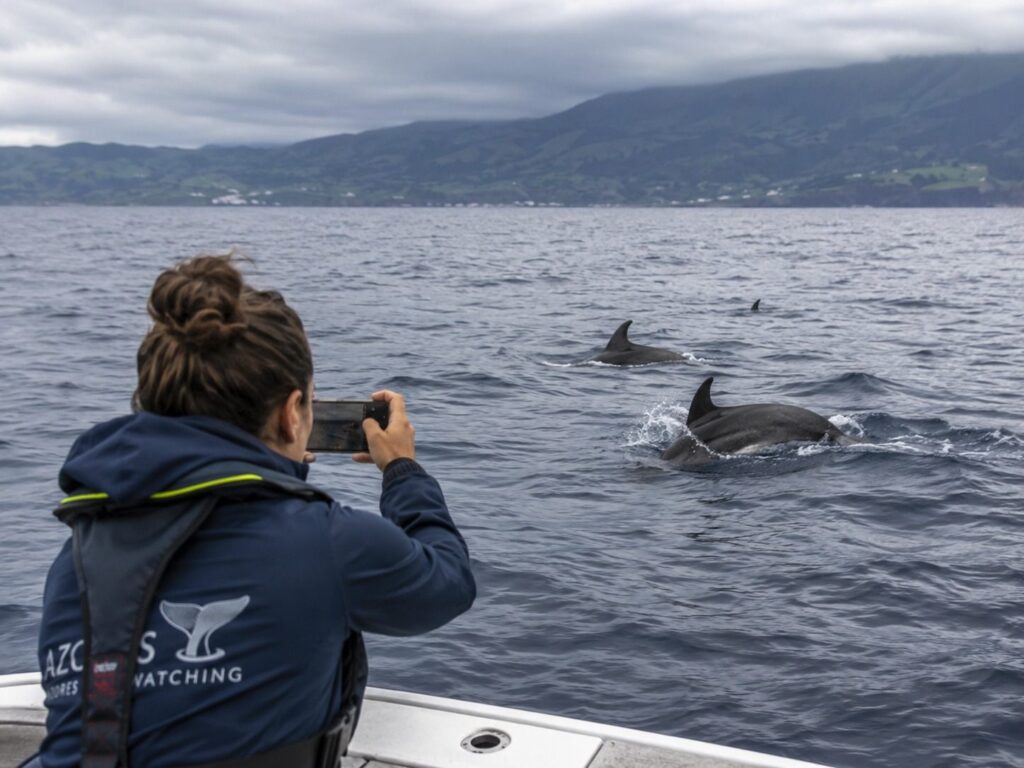
Seeing whales and dolphins in São Miguel is one of the most unforgettable experiences you can have in the Azores. The Atlantic Ocean here is not just a backdrop — it’s alive, dynamic, and full of movement.
More than 20 different species have been recorded in these waters throughout the year. Some pass through during migration, while others are regular residents, making São Miguel one of the best places in Europe for whale watching.
If you’re planning to experience whale and dolphin watching in São Miguel, a few key factors can make all the difference — from the time of year to the type of boat and even where you stay on the island.
Whale and dolphin watching in São Miguel takes place year-round, but there are important seasonal differences.
Between April and June, you have the highest chances of spotting large migratory whales, including the blue whale — the largest animal on the planet.
Dolphins, on the other hand, are frequent residents and can be seen in most months.
Most whale watching tours in São Miguel depart from Ponta Delgada or Vila Franca do Campo.
Before departure, you’ll receive a safety and environmental briefing. The Azores are globally recognised for sustainable whale watching, with strict regulations designed to protect marine life.
Boats are usually rigid inflatable vessels (zodiacs), fast and agile. Being close to the water makes the experience more intense — you feel the wind, the salt, and the silence when a whale surfaces.
This is a common question.
Success rates are high — often above 90%. However, this is wildlife in the open ocean, so there are no absolute guarantees.
Most operators offer a second trip free of charge if no animals are spotted.
During whale and dolphin watching in São Miguel, some of the most common species include:
The sperm whale is a particularly regular presence due to the deep waters close to the island.
Above all, keep an open mind — every trip is different.
Staying in Ponta Delgada or Vila Franca do Campo makes logistics much easier.
Having flexibility to move around helps you adapt your schedule and choose the best departure point.
This also allows you to combine a morning at sea with an afternoon exploring the island.
Yes. The activity is strictly regulated by regional legislation.
Operators are certified, skippers are experienced, and land-based lookouts help locate marine life — a tradition inherited from historical whaling, now transformed into conservation.
Safety and respect for wildlife are always the priority.
Plan your whale watching experience for the first days of your trip. If conditions change, you’ll have time to reschedule.
Discover São Miguel with complete freedom between each experience.
Between ocean and land, the freedom to explore makes all the difference.